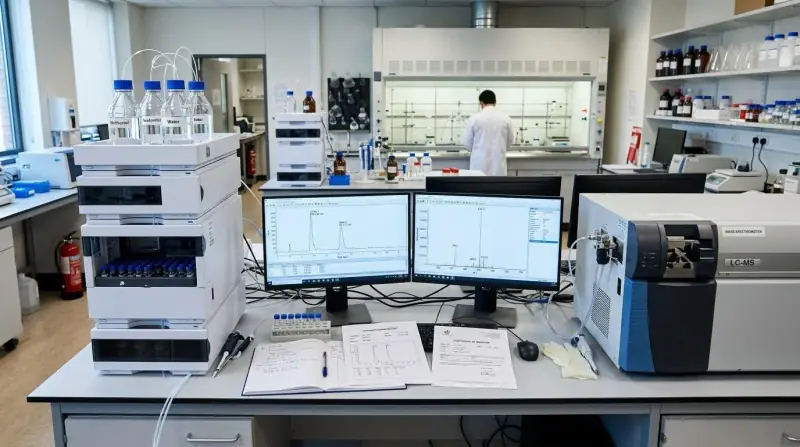
How to Read a Laboratory Certificate of Analysis
Methods, data and the limits of scientific interpretation in cannabis research
David Markflow · · 9 min read
In this article
- 1. What a Certificate of Analysis actually establishes
- 2. Identify the sample before interpreting the result
- 3. Understand what was measured, and by which method
- 4. Read the results table, not just the headline figures
- 5. Measurement uncertainty is part of the result
- 6. Genotype, phenotype and chemotype are not interchangeable
- 7. What a terpene profile can, and cannot, show
- 8. Evaluate the study behind the numbers
- 9. Why independent reproducibility matters
- 10. Seven questions to ask of any CoA or study
- The essential distinction: results versus conclusions
- References
A laboratory report can look authoritative at first glance: an institutional name, a report number, a table of results and an authorised signature. Yet even an impeccably presented certificate does not answer the central question: what, precisely, was tested, and what can those measurements legitimately establish?
This distinction matters when cannabis is studied as an object of scientific classification and analytical investigation. Materials grouped under the same broad label may differ in provenance, genetic characteristics and chemical composition. A Certificate of Analysis (CoA) is therefore best understood not as a blanket assurance but as evidence of specific measurements, bounded by the sample and methods used.
The following framework explains how to assess that evidence, distinguish findings from inference and identify conclusions that go beyond the available data.
1. What a Certificate of Analysis actually establishes
A Certificate of Analysis (CoA) records the results of specified analytical tests. There is no single format that applies across all industries: the document depends on the material, the laboratory, the test method and the relevant requirements. Crucially, the word “certificate” does not, by itself, mean that the material has undergone independent conformity certification.
A test report documents what was measured and how. Conformity certification, by contrast, evaluates compliance under the rules of a particular scheme. Laboratory accreditation addresses competence within a defined scope; it does not validate every possible claim about a specimen. ISO/IEC 17025 specifies requirements for the competence, impartiality and consistent operation of testing and calibration laboratories [1].

The most useful question is thus not which designation appears on the cover, but whether the document makes its source, subject, methods, results and limitations clear.
2. Identify the sample before interpreting the result
First establish exactly what was examined. An interpretable report should identify whether its findings concern one specimen, a set of specimens or a lot represented through a documented sampling procedure. Look for sample identifiers, receipt dates, material descriptions and provenance records.
The distinction between a sample and a lot is fundamental. A laboratory may measure the submitted material accurately without establishing that it represents every material sharing a name or category.
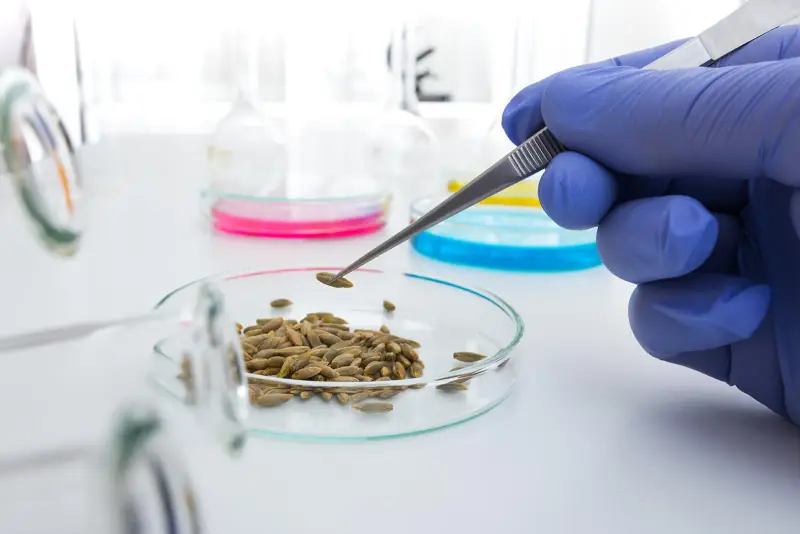
The International Seed Testing Association (ISTA) provides a useful illustration. Under its system, an Orange International Seed Lot Certificate relates to an identified lot subject to prescribed sampling requirements, whereas a Blue International Seed Sample Certificate concerns a submitted sample. ISTA explains that, for a Blue Certificate, responsibility for the representativeness of the sample does not rest with the testing laboratory [2]. The broader lesson is methodological: the strength of a conclusion depends on sampling as well as analytical accuracy.
3. Understand what was measured, and by which method
Next, identify the measurand: the specific quantity or property the analysis was intended to determine. Chemical composition, genetic classification and observable characteristics are distinct levels of description. Evidence at one level does not automatically establish claims at another.
Phytochemical profiling identifies or quantifies selected chemical constituents, whereas genetic identification relies on molecular markers or other DNA-based evidence. The relevant question is whether the method is appropriate for the research objective.
Chemical measurements may employ chromatographic and mass-spectrometric techniques. In its cannabis laboratory quality-assurance programme, the US National Institute of Standards and Technology (NIST) examines analytical methods alongside sample preparation and measurement comparability [3]. An instrument name alone is therefore insufficient. Readers need to know which analytes were included, how their identities were established and how concentrations were calculated.
4. Read the results table, not just the headline figures
Misinterpretation often begins with units, detection limits or comparisons made between non-equivalent measurements.
| Report field | What to check | Why it matters |
|---|---|---|
| Analyte | The specific compound or property measured | One analyte does not describe the entire material |
| Result | Numerical value, unit and calculation basis | Mass fractions and percentages of selected analytes cannot be equated |
| LOD (limit of detection) | Whether the analyte can be detected reliably | Not detected does not establish absolute absence |
| LOQ (limit of quantification) | Whether a numerical amount can be reported reliably | Below LOQ is not an exact concentration |
| Method | Procedure and validated scope | Methods may cover different compounds and concentration ranges |
| Measurement uncertainty | Whether uncertainty is reported and what it covers | A small numerical difference may not be meaningful |
Labels such as ND (“not detected”) and <LOQ (“below the limit of quantification”) do not necessarily imply a concentration of zero. Their meaning depends on the laboratory’s definitions and the method’s capabilities.
Before comparing values expressed in milligrams per gram and percentages, convert them to the same basis. Even when the units match, the sample types and definitions of the measurand must also be comparable.
5. Measurement uncertainty is part of the result

Every quantitative measurement has limits. Measurement uncertainty characterises the dispersion of values that could reasonably be attributed to the measurand. It is not simply “instrument error”: sample preparation, calibration, repeatability and other factors may all contribute. NIST guidance treats uncertainty as integral to the interpretation and reporting of measurement results [4].
Suppose two samples produce similar values for a given chemical constituent. A marginal difference between the reported numbers does not, on its own, establish that the underlying materials differ. Method precision, sampling design and the relevant uncertainties must be considered.
Likewise, a long string of decimal places should not be mistaken for high analytical certainty. Numerical detail and evidential strength are not the same thing.
6. Genotype, phenotype and chemotype are not interchangeable
Genotype refers to genetic information; phenotype to observable or measurable traits; and chemotype to a chemical profile classified according to defined criteria. These terms describe related but different aspects of biological material.
Two specimens may be assigned to the same chemotype without sharing an identical genotype. Conversely, genetic similarity does not require every chemical measurement to yield identical values. Research that compares molecular markers with cannabis chemical profiles treats these as linked, rather than equivalent, forms of evidence [5].
When examining a CoA, ask whether DNA was analysed or whether the laboratory measured chemical constituents only. A chemical profile alone does not establish genetic identity, purity or stability.
7. What a terpene profile can, and cannot, show
Terpene profiles illustrate the risk of interpreting a narrow measurement as a complete characterisation. A report may list detected compounds and their measured abundance, but those data are limited to the analytes covered by the method and its analytical sensitivity.
If a result is given as a relative percentage, establish the denominator. A percentage of the sum of quantified compounds is not the same as a percentage of the total sample mass.
The terms “terpenes” and “terpenoids” are also not used identically in every publication. Interpretation should follow the operational definitions adopted by the authors rather than assuming that different compound lists are directly comparable.
Above all, a chemical profile is an analytical description. It does not independently prove provenance, genetic identity or any other property that was not tested.
8. Evaluate the study behind the numbers
A single CoA is not the same as a complete scientific paper. Nevertheless, both should withstand a similar methodological test: Is the question clear? Were samples selected appropriately? Is the procedure reproducible? Do the conclusions follow from the evidence?
Sample size cannot be assessed apart from sample structure. Ten repeat measurements of one specimen are not equivalent to ten independent specimens. The former may describe analytical repeatability; the latter may help characterise variation between independent units. Treating these observations as interchangeable can inflate statistical confidence.
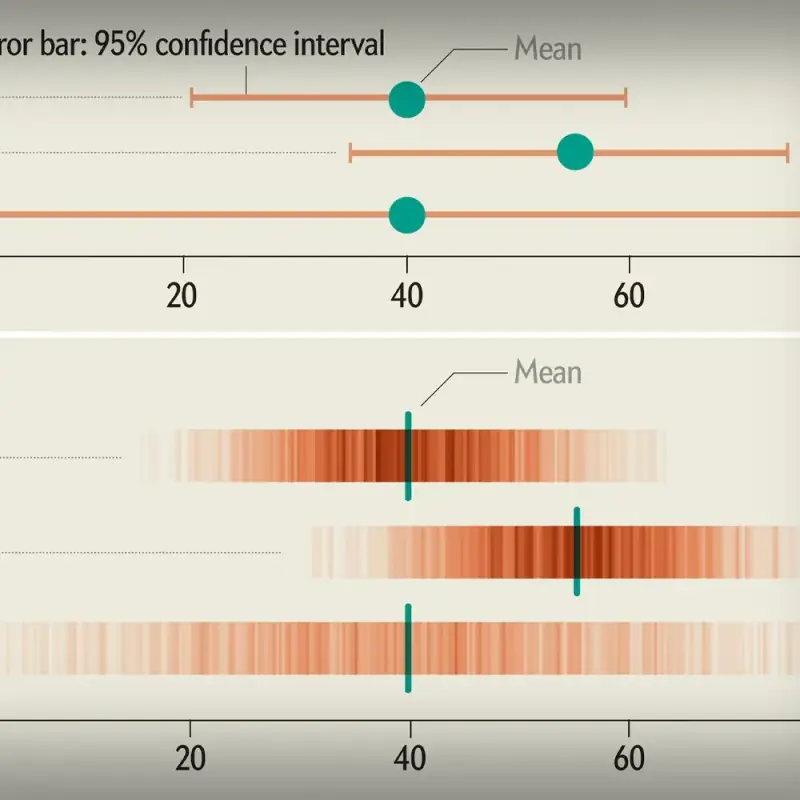
Statistical significance does not, by itself, indicate the magnitude or relevance of a difference. Examine effect sizes, variability, confidence intervals, limitations and possible confounders. An association between variables is not sufficient evidence of causation.
Transparent studies also disclose funding, competing interests, exclusion criteria and material departures from the original plan. The OECD Principles of Good Laboratory Practice emphasise documented procedures, records and reporting as foundations of study traceability within their applicable scope [6]. They are a useful methodological reference, but their citation does not imply that any particular paper was conducted under GLP.
9. Why independent reproducibility matters
Well-run laboratories may still report different values. Differences in sample preparation, calibration, analyte selection, measurement range or calculation conventions can affect the outcome.
NIST established its Cannabis Laboratory Quality Assurance Program (CannaQAP) to assess and improve comparability between laboratories. Its second-exercise report describes an interlaboratory assessment of selected chemical measurements in cannabis plant material [7]. Such exercises demonstrate why cross-laboratory agreement should be tested rather than assumed.
A scientifically useful publication must describe sampling, preparation, analytical procedures and data processing in enough detail for critical evaluation. Missing information does not prove that a finding is wrong, but it does limit how confidently the finding can be assessed or reproduced.
10. Seven questions to ask of any CoA or study
-
What material was tested, and how many independent samples were included?
-
Does the report describe a submitted sample or a lot represented by a documented sampling procedure?
-
Is the analytical method suitable for the question being asked?
-
Are units, detection limits and quantification limits clearly defined?
-
Are uncertainty, repeatability and quality-control procedures reported?
-
Does the study have adequate independent replication and appropriate statistical analysis?
-
Do the authors restrict their conclusions to what was actually measured?
The essential distinction: results versus conclusions
A well-presented Certificate of Analysis is neither a complete characterisation of cannabis nor a general guarantee of a material’s properties. Its meaning depends on the specimen, sampling procedure, measurement method, reporting units and associated uncertainty.
The same standard applies to research papers. Scientific credibility rests less on striking conclusions or sophisticated equipment than on clearly formulated questions, transparent methods, appropriate statistics and explicit limitations.
Sound scientific interpretation begins with a shared understanding of both what the evidence establishes and what it cannot establish.
References
- ISO. ISO/IEC 17025:2017. General requirements for the competence of testing and calibration laboratories. https://www.iso.org/standard/66912.html
- International Seed Testing Association (ISTA). Accreditation FAQs: Blue Certificate and scope of accreditation. https://www.seedtest.org/en/accreditation/accreditation-faqs.html
- NIST. NIST Tools for Cannabis Laboratory Quality Assurance. https://www.nist.gov/programs-projects/nist-tools-cannabis-laboratory-quality-assurance
- Taylor, B. N., & Kuyatt, C. E. Guidelines for Evaluating and Expressing the Uncertainty of NIST Measurement Results. NIST Technical Note 1297. https://www.nist.gov/document/tn1297spdf
- Gomes, A. P., et al. Genotype and chemotype insights of high-THC medicinal Cannabis sativa L.: the role of SSR markers in the identification of cultivars. Journal of Cannabis Research (2025). https://doi.org/10.1186/s42238-025-00357-w
- OECD. OECD Principles on Good Laboratory Practice. OECD Publishing (1998). https://doi.org/10.1787/9789264078536-en
- Yarberry, A., Phillips, M. M., & Wilson, W. B. Cannabis Laboratory Quality Assurance Program: Exercise 2 Cannabinoid Final Report. NIST IR 8519 (2024). https://doi.org/10.6028/NIST.IR.8519